
COLUMBIA, SC
IgA Nephropathy and Rare Kidney Disease Clinical Trials
3 inherited kidney disease studies are enrolling near Columbia SC, all for the APOL1 high risk gene. However, no IgA nephropathy, FSGS or membranous study is open here, and we say so plainly. Compensation is provided for eligible participants.
3
Enrolling Near You
0
For IgA Nephropathy
+/- $100
Per Visit
New here? Read how this page works
First, these diseases are not interchangeable, and the exact name on your biopsy report decides everything. So here is the fastest way to work out which studies apply.
- Know your exact diagnosis. Because FSGS, IgA nephropathy and membranous nephropathy lead to completely different studies.
- Find your biopsy report. Notably, one study accepts a biopsy from up to 7 years ago, so you may not need a new one.
- Check the drive on each card. In fact, the nearest IgA nephropathy study is more than two hours away.
- Finally, put your name in. Then we check you against all of them and call you when one opens closer.
Of course, checking never signs you up for anything. You are only seeing where you might fit.
The 3 Inherited Kidney Studies Enrolling Near Columbia
All three are for one inherited cause. So we also list the nearest doors for the other rare kidney diseases.
Inherited kidney disease, and these do run here
These three are for the APOL1 high risk gene pair, which is an inherited cause rather than IgA nephropathy or FSGS. So we label them plainly rather than hiding them in.

A Pill for an Inherited Cause
Vertex / Drug
This is only for people who carry two copies of a kidney risk gene called APOL1. Half get the real pill and half get a dummy pill.
Est. about $100 per visit. Ask the site for the total number of visits.
Check eligibility →More details
Why researchers are excited: it is one of the first medicines built to switch off an inherited cause of kidney disease rather than just controlling blood pressure.
Who this study is looking for
- Age 10 to 65
- Also, A gene test confirms you carry the APOL1 high risk pair
- Besides that, protein is leaking into your urine
- Finally, you are not on dialysis and have not had a transplant
Probably not a fit if: you have any history of diabetes, which rules out a large share of people with kidney disease. Also, any transplant or another known cause such as sickle cell rules you out.
- Placebo group: A coin flip decides real pill or dummy pill, and the two look the same. Neither you nor your doctor knows which.
- How long: The first part runs about 2 years, then an extension can run to about 4.
- Clinic visits: The published points are day 1, week 40 and week 48, then on through the extension. So the total is not registered.
- Phone calls: Not published on the public record.
- Most invasive part: Blood draws, including one for the gene test, plus urine samples. Notably, no biopsy is needed.
- Setting: Outpatient.
- Where it runs: Columbia Nephrology Associates, Columbia SC 29203.
- Read this first: you cannot know if you qualify without the gene test, and any history of diabetes shuts the door. So a lot of people screen out here.
- Full study record: View on ClinicalTrials.gov →

Twelve Weeks, and Everybody Gets the Real Drug
Maze Therapeutics / Drug
Another pill aimed at the same APOL1 gene, and the lightest study on this page. There is no dummy at all, so every person takes the real thing and knows it.
Payment is not published. However, 12 weeks is the shortest commitment here.
Check eligibility →More details
Why researchers are excited: it goes after the same inherited cause as the Vertex pill but by a different route, and 12 weeks is short enough to give an answer fast.
Who this study is looking for
- Age 18 to 68
- Also, A gene test confirms you carry the APOL1 high risk pair
- Besides that, kidney disease with albumin still showing in your urine
- Finally, you are not pregnant or nursing
Probably not a fit if: you have had a transplant, or type 1 diabetes, or weight loss surgery, because that last one changes how you absorb pills.
- Placebo group: None at all. Every person gets the real study drug, and everybody knows it.
- How long: 12 weeks of treatment.
- Clinic visits: Only the start and week 12 are published. So the total is not on the record, but the study is short.
- Phone calls: Not published on the public record.
- Most invasive part: Blood draws and urine samples.
- Setting: Outpatient.
- Where it runs: Research Site, Columbia SC 29203.
- Worth knowing: this is the easiest yes on the page, at 12 weeks with no dummy. However, the age limit stops at 68, which is unusually low.
- Full study record: View on ClinicalTrials.gov →

Turning Down the Harmful Protein Itself
AstraZeneca / Drug
A shot under the skin for people with the APOL1 high risk gene pair. Rather than blocking the effects, it turns down how much of the harmful protein your body makes.
Est. about $100 per visit. Ask the site for the total number of visits.
Check eligibility →More details
Why researchers are excited: it is aimed squarely at people of African descent, the group that carries almost all of this risk and has long been left out of research.
Who this study is looking for
- Age 18 to 70, of African descent, broadly defined
- Also, A gene test confirms you carry the APOL1 high risk pair
- Besides that, protein in your urine at 300 or above
- Finally, kidney function of 25 or above
Probably not a fit if: you have type 1 diabetes, or a heart rhythm problem, or you are on dialysis, or you have another kidney disease such as lupus or IgA nephropathy.
- Placebo group: In the first part you are split three ways, so 2 in 3 get real drug. In the second part 4 out of every 5 do.
- How long: At least 30 weeks of treatment, then up to 12 more weeks of checks. An open extension follows.
- Clinic visits: Dosing is weekly in the first part and every other week in the second, across at least 30 weeks. However, whether some shots are given at home is not published, so ask.
- Phone calls: Not published on the public record.
- Most invasive part: Regular shots under the skin, plus heart tracings and blood draws.
- Setting: Outpatient.
- Where it runs: Research Sites, Columbia SC 29203 and Orangeburg SC 29118.
- Drive from Columbia: Orangeburg is about 45 miles southeast, so roughly 50 minutes on US-21.
- Read this first: screening alone wants three first morning urine samples on three days in a row. So there is real work before you even know if you qualify.
- Full study record: View on ClinicalTrials.gov →
Not near you, but worth knowing
No IgA nephropathy, FSGS or membranous study runs in Columbia. So these are the nearest doors, and each involves a drive.
Tested Against a Real Drug, Not a Dummy
Vertex / Drug
For membranous nephropathy. This one is compared head to head against tacrolimus, a drug already used for it. So nobody receives a dummy.
Payment is not published. However, no participant is left untreated.
Get on the list →More details
Why researchers are excited: head to head against an active drug is far more useful than beating a placebo. Also, it means every person enrolled is being treated.
Who this study is looking for
- Adults with primary membranous nephropathy
- Also, the full rules are on the study record, so read them before you call
- Besides that, you can travel to Greenville or Spartanburg
- Finally, you can stay in the study for about two years
Probably not a fit if: distance again. Both sites are upstate, so neither metro has one.
- Placebo group: None at all. Both groups get a real, active drug.
- How long: The main result lands at week 104, so about two years.
- Clinic visits: Not published on the public record. So ask the clinic for the schedule before you agree.
- Phone calls: Not published on the public record.
- Most invasive part: Repeated blood draws and urine collections.
- Setting: Outpatient.
- Where it runs: Carolina Nephrology, Greenville SC 29605 and Spartanburg SC 29306.
- Drive from Columbia: Greenville SC is about 100 miles northwest, so roughly 1 hour 40 minutes on I-26 and I-385.
- Worth knowing: a head to head design like this is unusual and worth asking about, because it means the comparison group is getting real care rather than nothing.
- Full study record: View on ClinicalTrials.gov →
The Closest Study for IgA Nephropathy
Takeda / Drug
An antibody that clears out the immune cells making the antibody that damages your kidney filters. Two out of every three people get the real drug.
Payment is not published. Notably, treatment is only 22 weeks of the two years.
Get on the list →More details
Why researchers are excited: IgA nephropathy has moved faster than any area in kidney medicine. However, this is the nearest study, and it is still a long drive.
Who this study is looking for
- Adults with IgA nephropathy
- Also, the full rules are on the study record, so read them before you call
- Besides that, you can travel to Winston-Salem repeatedly
- Finally, you can stay in the study for about two years
Probably not a fit if: distance is the first hurdle. There is no site in either metro, and none anywhere closer.
- Placebo group: Yes, but the odds favour you at 2 in 3 getting the real drug.
- How long: 22 weeks of treatment, then watching to 2 years.
- Clinic visits: Not published as a total. The named points are the start, week 36, week 52 and week 104, with monthly check ups during the watching stage.
- Phone calls: Not published on the public record.
- Most invasive part: Repeated blood draws and urine collections.
- Setting: Outpatient.
- Where it runs: Brookview Hills Research Associates, Winston-Salem NC 27103.
- Drive from Columbia: Winston-Salem is about 230 miles north, so roughly 3 hours 30 minutes.
- Why we list it: there is no IgA nephropathy study in either metro at all, so this is the closest door in the country’s fastest moving kidney field.
- Full study record: View on ClinicalTrials.gov →
For People Who Finished the Standard Course
Calliditas / Drug
This is for people with IgA nephropathy who already completed the standard 9 month course of the approved capsule and still have protein in their urine. Everybody gets the real drug.
Payment is not published. However, there is no dummy at all.
Get on the list →More details
Why researchers are excited: it answers a question people actually face, which is what to do when the approved treatment ends and the problem has not gone.
Who this study is looking for
- Adults with IgA nephropathy
- Also, you already finished the standard 9 month course of the approved capsule
- Besides that, you still have protein in your urine
- Finally, you can travel to Raleigh
Probably not a fit if: distance is the barrier. Raleigh is about 2 hours 45 minutes from Charlotte and further from Columbia.
- Placebo group: None at all. Every person gets the real drug and knows it.
- How long: About 19 months.
- Clinic visits: Not published on the public record. So ask the clinic before you commit.
- Phone calls: Not published on the public record.
- Most invasive part: Repeated blood draws and urine collections.
- Setting: Outpatient.
- Where it runs: North Carolina Nephrology, Raleigh NC 27609.
- Why we list it: very few studies take people after the approved treatment is done. So this fills a gap that a lot of readers will recognise.
- Full study record: View on ClinicalTrials.gov →
Not sure which one fits you?
First, answer a few quick health questions. Then we check you against every rare kidney study we track. No account, no paperwork.
See if I may fit one of these studies →What Is Actually Changing in Rare Kidney Disease
The fastest moving field in kidney medicine, and a gap right here.
What These Diseases Are
The kidney filters blood through millions of tiny units. In these diseases those filters get damaged, by the immune system, by an inherited gene change, or by scarring. Then protein starts leaking into the urine, which is usually the first sign. Also, most of them are confirmed by a kidney biopsy rather than by a blood test.
The Old Answer Was Steroids
For a long time there were only two tools. Blood pressure drugs to slow the leak, and broad steroids to damp down the whole immune system. However, wide immune suppression carries real harm, from infections to bone loss to weight gain. So a diagnosis often meant waiting and watching kidney function fall.
IgA Nephropathy Changed Fastest
In just a few years this went from having no approved disease specific drug to having several. A targeted capsule that acts in the gut, a dual blocker of two pathways, and a complement blocker taken as a pill. As Isabelle Ayoub of Ohio State put it, this is a pivotal moment, with tools to find high risk patients earlier and new agents to act on that.
What the Experts Say Comes Next
Timothy Yau of Washington University called the current pace of innovation remarkable, and said more precise strategies are expected. Meanwhile, Kerry Willis of the National Kidney Foundation pointed to prediction tools that combine clinical and biopsy data to estimate risk. So the hard part is shifting from whether to treat toward choosing between real options.
FSGS Is Just Behind
FSGS still has no drug approved specifically for it in the United States. However, that is exactly what two studies near Charlotte are trying to change. One adds a capsule on top of your usual blood pressure pill. The other blocks one specific channel on the filter cells, which matters most if your disease comes from a fault in that gene.
The Gap Worth Naming
Here is the honest part. There is no IgA nephropathy study recruiting in either metro. We checked every recruiting study in the world one by one rather than trusting a search filter. Every Carolina site sits in Winston-Salem, Raleigh, Durham, Chapel Hill or Greenville. So in the fastest moving field in kidney medicine, this is the one place we cannot point you next door.
Research Sites Near Columbia
Columbia Nephrology and MUSC Orangeburg carry these between them. But sites add new studies all the time, so it is worth knowing what sits near you.
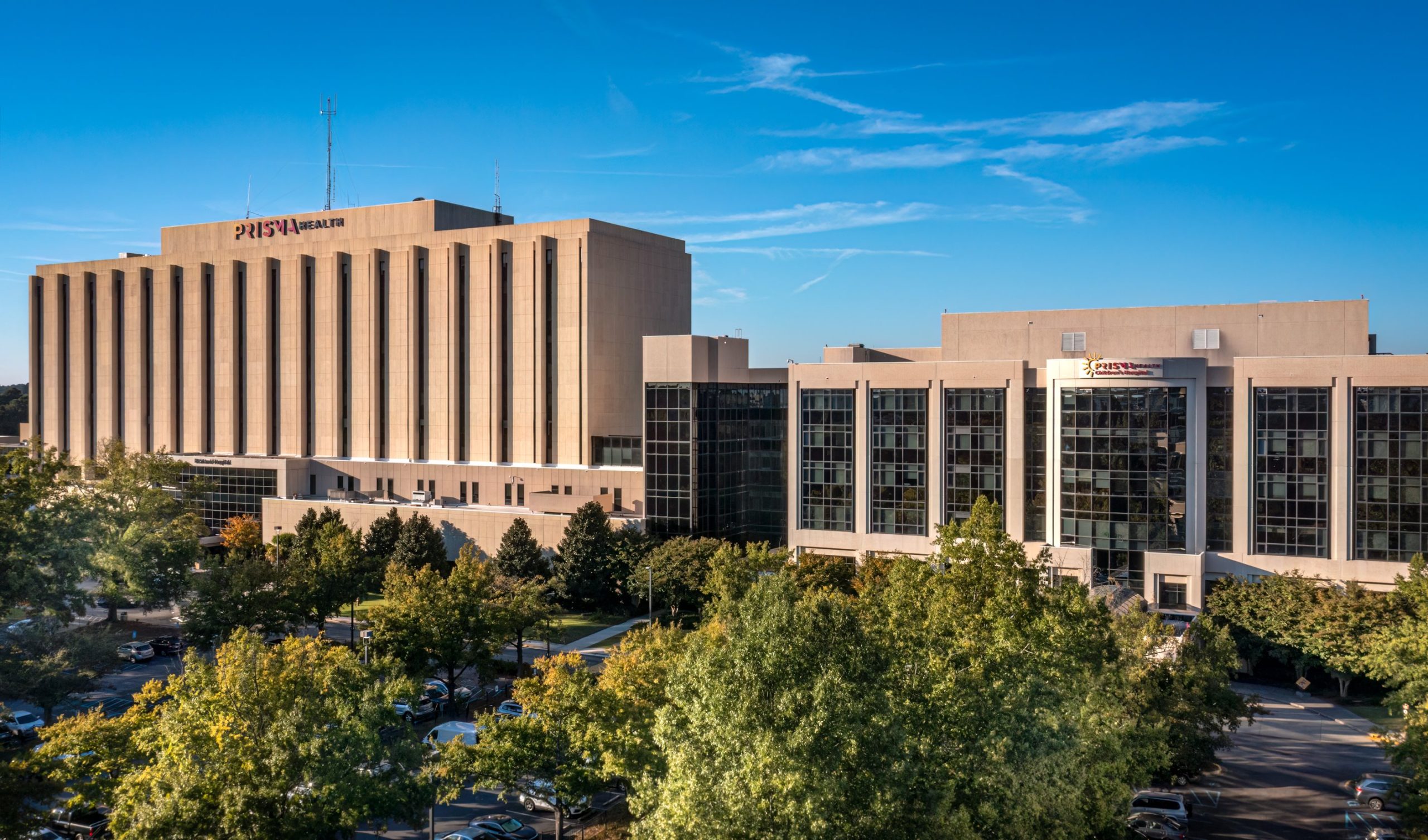
Prisma Health Richland Hospital
Downtown Columbia / 37+ active studies
Cancer, blood disorders, broad hospital research
The flagship Prisma Health hospital in the Midlands. Also, by far the biggest trial operation in the Columbia metro.
Visit Website →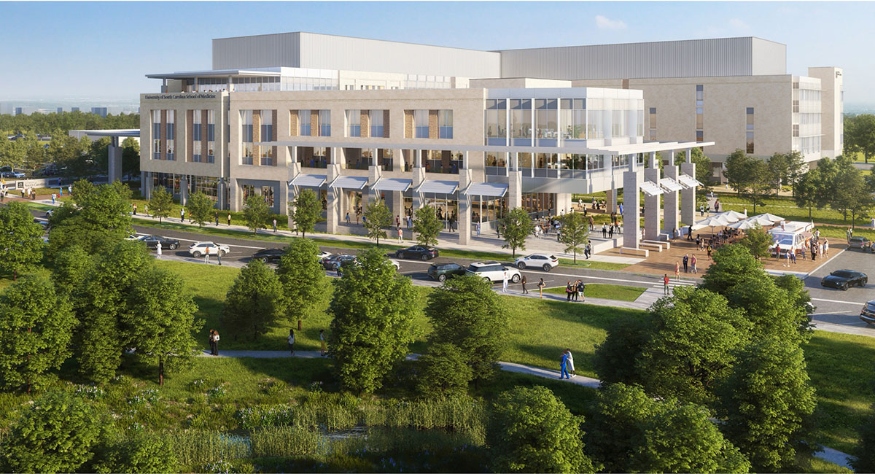
University of South Carolina
Columbia / 27+ active studies
Stroke recovery, physical activity, community health
Notably, a research university that runs federally funded health studies across the Midlands. Specifically, topics range from stroke rehab to disease prevention.
Visit Website →
Bogan Sleep Consultants
Columbia / 7+ active studies
Narcolepsy, sleep disorders
One of the best known private sleep research sites in the Southeast. Also, it has run sleep trials for decades.
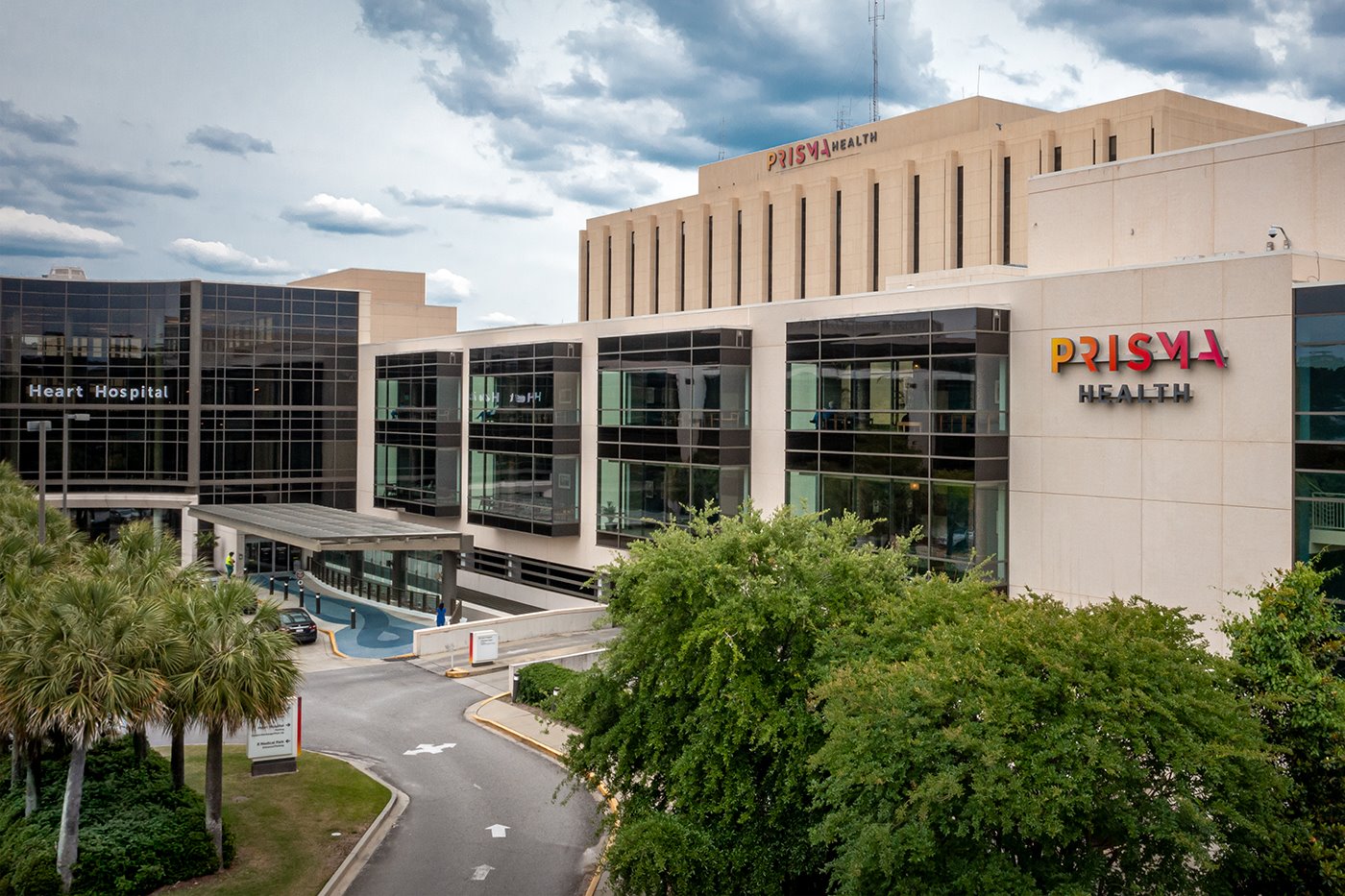
Prisma Health Midlands Cardiovascular
Columbia / 4+ active studies
Cardiovascular disease, heart failure
The heart and vessel research arm of Prisma Health in the Midlands. So it is the natural home for cholesterol trials in Columbia.
Visit Website →
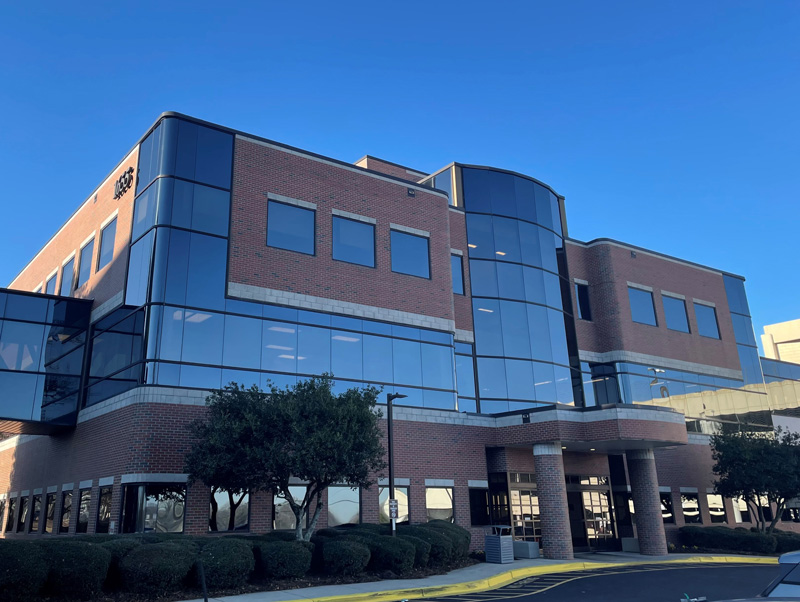
Prisma Health Children’s Hospital, Midlands
Columbia / 4+ active studies
Pediatric growth, cystic fibrosis
Basically, the Midlands hub for children’s research inside the Prisma Health system.
Visit Website →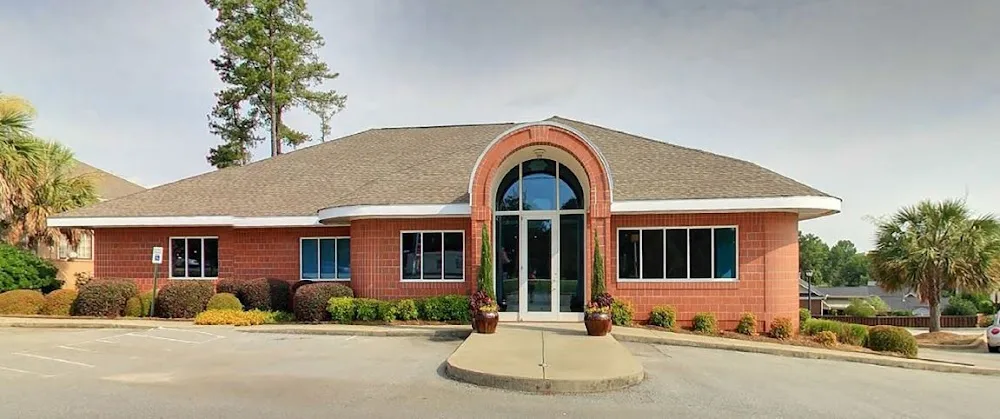
Columbia Dermatology & Aesthetics
Columbia / 4+ active studies
Hidradenitis suppurativa, psoriasis, obesity
A skin care practice with its own research team. It runs both skin and weight studies.
Velocity Clinical Research, Columbia
Columbia / Multiple active studies
COPD, skin conditions, vaccines
Part of one of the biggest research site networks in the country. Besides, it is just the kind of site the huge outcome trials lean on.
Visit Website →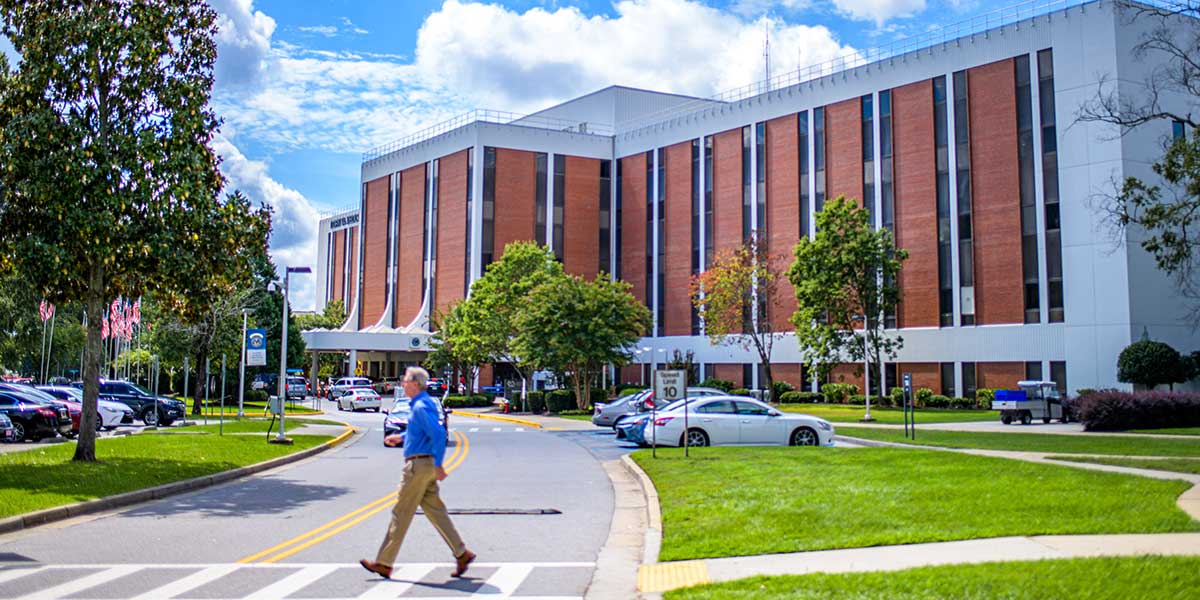
Wm. Jennings Bryan Dorn VA Medical Center
Garners Ferry Road, Columbia / 2+ active studies
Atherosclerosis, liver disease
Columbia’s VA medical center runs studies, including ones on clogged arteries. For veterans, it is often the first door.
Visit Website →
Objective Health, Columbia
Columbia / 2+ active studies
Celiac disease, fatty liver disease
Once called Columbia Digestive Health Research. Now it is part of the Objective Health network. Specifically, it runs gut and liver studies, including fatty liver trials.
Columbia Gastroenterology Associates
Columbia / Active studies
Digestive conditions
A long-running gut health practice. Also, it takes part in digestive trials around Columbia.
What to Expect in a Rare Kidney Study
New to studies? Here is how one works, step by step.
01
Prescreening
First comes a short phone call or online form. Also, it takes about 10 to 15 minutes. The staff check whether you might fit. Then they tell you what is open.
02
Screening Visit
Next the clinic runs the tests that decide it, which usually means blood work. Also, they go through the consent form line by line, and you can bring somebody with you.
03
Treatment Period
Then the study begins. So you take the study drug or the placebo on the agreed schedule. Meanwhile, your own doctor keeps managing everything else.
04
Follow-Up
Finally, there is a check in period at the end. Also, your own doctor gets the results, and you can stop at any point without affecting your care.
Rare Kidney Disease Trial FAQs
Real answers about FSGS and IgA nephropathy studies near Columbia SC.
Is there a rare kidney disease study near Columbia?
Yes, three, but they are all for one inherited cause called the APOL1 high risk gene pair. That is not the same as IgA nephropathy, FSGS or membranous disease. So we label them plainly. Also, a gene test decides whether that door is open to you. So the exact name on your biopsy report still decides the rest.
Is there an IgA nephropathy study near me?
No, and this is the most important thing on the page. There is no IgA nephropathy study recruiting in either metro, despite this being the fastest moving field in kidney medicine. We opened every recruiting study in the world one by one rather than trusting a search filter. So the nearest sites are in Winston-Salem, Raleigh, Durham, Chapel Hill and Greenville.
What changed in IgA nephropathy?
In just a few years it went from having no drug approved for it to having several. There is a capsule that acts in the gut, a blocker of two pathways at once, and a complement blocker taken as a pill. As Isabelle Ayoub of Ohio State put it, this is a pivotal moment with tools to find high risk patients earlier. So the hard part now is choosing between real options rather than waiting.
Do I need a new kidney biopsy?
Usually not, and this saves people a lot of worry. The FSGS study accepts a biopsy done any time in the past 7 years. The observational study collects tissue from a biopsy you were already scheduled to have. So dig out your old report before you assume you need another one.
Will I be taken off my current medicine?
No. In both local drug studies you stay on the blood pressure pill you already take. The study drug is added on top, and the coin flip only decides whether that addition is real. Also, in the FSGS capsule study everyone who finishes the blinded stage is offered the real drug afterwards. So nobody is left untreated.
What is the 24 hour urine collection?
You carry a container and collect everything you pass for a full day. It is not painful, but people consistently rate it as the most disruptive part of these studies. Also, it comes round repeatedly rather than once. So ask how many times before you agree, because it shapes the whole experience.
Is there a placebo?
It depends on the study, and one of them avoids it entirely. Both FSGS studies use a dummy capsule, though everybody keeps their normal kidney medicine. The membranous nephropathy study is compared against a real drug instead, so nobody gets a dummy. Meanwhile, the observational study gives nothing to anyone, because it only watches.
Does it cost anything to be on the list?
No. There is no cost, and no insurance is needed. Tether is a nonprofit list, so we do not run studies and we are not paid to send you anywhere. Also, being on the list never enrolls you in anything. You would always call the clinic yourself.
How long do these studies run?
Longer than most, and that is worth knowing upfront. The FSGS capsule study can run four and a half years if you take the extension. The other FSGS study runs two years, and the observational one has been going since 2010. So match the commitment to what you can realistically do.
Where can I get rare kidney care near Columbia SC?
Columbia Nephrology, Prisma Health and Lexington Medical Center all run kidney clinics across the Midlands. Also, ask for a kidney doctor who handles filter disease, because that is a narrower field. Your own doctor can refer you. Meanwhile, keep a copy of your biopsy report, because every study here asks for it.
Ready to Explore a Study?
Check your eligibility, or just reach out to our Columbia team. No pressure. Also, no sales pitch.
← Back to All Clinical TrialsSources
- ACTION3 DMX-200 study in FSGS, ClinicalTrials.gov NCT05183646
- BI 764198 in primary and genetic FSGS, ClinicalTrials.gov NCT07220083
- NEPTUNE Nephrotic Syndrome Study Network, ClinicalTrials.gov NCT01209000
- Mezagitamab in IgA nephropathy, ClinicalTrials.gov NCT06963827
- OLYMPUS povetacicept in membranous nephropathy, ClinicalTrials.gov NCT07204275
- NefXtend extended budesonide in IgA nephropathy, ClinicalTrials.gov NCT06712407
- National Kidney Foundation: new US commentary on IgA nephropathy, with comment from Isabelle Ayoub, MD, Timothy Yau, MD and Kerry Willis, PhD
Study details and per-site recruiting status verified against ClinicalTrials.gov on August 15, 2026. On that date no IgA nephropathy study was recruiting in either the Charlotte or Columbia metro. Two South Carolina sites of the FSGS study are listed but are closed to new patients. Study availability and criteria change; the research clinic confirms everything before you enroll.