
For physicians
What research adds to your practice.
Something to offer the patient you have run out of options for. A second line of business. Work that is interesting again.
Fewer than four percent of American physicians ever run a clinical trial, and about half of those never run a second one. Here is why, and what to do about it.
One partner practice. Charlotte, Rock Hill, Columbia. First patient targeted for summer 2027.
Figure 1
One hundred physicians
Fewer than four in a hundred American physicians ever run a clinical trial, and about half of those never run a second one.
01
There is a moment every physician recognizes.
You have a patient you have treated for years. You have worked the ladder. First line, second line, the off label attempt you made because you were out of ideas. Now you are standing at the bottom of it with nothing left in the drawer.
So you say the sentence. There is not much else I can offer you right now.
Then you write a referral, or you do not, and either way that patient goes home and someone in their family gets on a computer that night and starts typing clinical trial for. They find one at an institution three hours away, run by a physician who has never met them. That institution will handle the interesting part of their care from here on out. You will keep doing the refills.
That is the visible version of the problem. Three quieter ones sit behind it.
Your patients have never been asked.
When patients are surveyed directly, roughly 87 percent say they would be willing to take part in a clinical trial and 71 percent say they would consider one if their own physician encouraged them.1 About half say their doctor is who they want to hear it from. Very few ever do. Most find out from a search bar. Meanwhile about two in five primary care physicians say their patients would not be interested, or would not qualify.2 Both groups cannot be right.
Figure 2
Both groups cannot be right
87 percent of patients say they would be willing. About 40 percent of physicians assume they would not be interested.
Sources 1 and 2.
Your practice grows only through the channels it already has.
Referrals, reputation, and whatever the local market sends you. Meanwhile people are actively searching for trials for themselves and their families in numbers that did not exist a decade ago, and those searches lead them to whoever is running the study.
And the work itself has narrowed.
Most physicians did not go into medicine to spend their forties administering a formulary. The intellectual part of the job has been getting squeezed by everything around it.
02
What a research arm actually changes
It gives you something to say when the ladder runs out.
This is the whole argument and everything else is secondary. A practice with a research arm has a third act. The patient does not leave your building. They stay, under your care, on something new. You go from being the physician who ran out of options to being the only one in the area who has one.
It puts your patients under closer observation than any payer will authorize.
Protocol mandated visits, labs, imaging and structured follow up on a schedule no insurer would approve, at no cost to the patient.
The outcomes literature supports the direction. A study of 140 English NHS trusts covering 2.35 million admissions found the most research active tier had significantly lower risk adjusted mortality.3 A systematic review of 33 studies across nine countries found 28 reported that research engagement improved healthcare performance.4
Here is the caveat, because you should have it. That work is observational and hospital based, not private practice. There is also no controlled study proving that trials improve patient retention in a clinic. I looked, and anyone who tells you otherwise has not read the literature. What holds without a study is the logic. A patient you can still help is a patient who does not leave.
It opens a patient channel that has nothing to do with your referral network.
Research as a care option is more visible now than it has ever been. People search for trials for a parent, a spouse, themselves, and they walk into the office of a physician they had never heard of the day before. You are not competing with every practice in the county for a generic search term. You are the only one running that protocol.
It changes the nature of the work.
Longer visits. New mechanisms. Actual contribution to the evidence base rather than downstream consumption of it. Among physicians who have taken part in research, roughly seven in ten say it improved their patient care and two thirds say the benefits outweighed the effort.5 Asked why they started, the leading answer was improving quality of care, ahead of curiosity and ahead of anything else.
And it adds a line of business that behaves differently from the rest of your practice.
Study work is contracted with a sponsor rather than billed to a payer. For an independent practice that is a form of diversification very little else on your schedule provides.
It also compounds in a way clinical volume does not. One study occupies a fraction of a room and a fraction of a week. A second study running alongside it uses the same source templates, the same logs, the same trained staff and the same recruitment engine the first one paid to build. The infrastructure gets built once. Everything after that runs on it.
The economics deserve more room than a web page should give them, so they are not here. They are the substance of the blueprint at the bottom of this page, which covers how study budgets are built, what a realistic ramp looks like, and where money goes out before it comes back.
Independent practices are unusually well suited to this.
Roughly two thirds of active principal investigators in the United States are private practice rather than academic,6 and independent sites activate studies in about half the time academic medical centers do.7 What a sponsor needs is a physician who can commit, a panel of patients who answer the phone, and a site that can start this quarter. That describes a well run private practice better than it describes almost anything else.
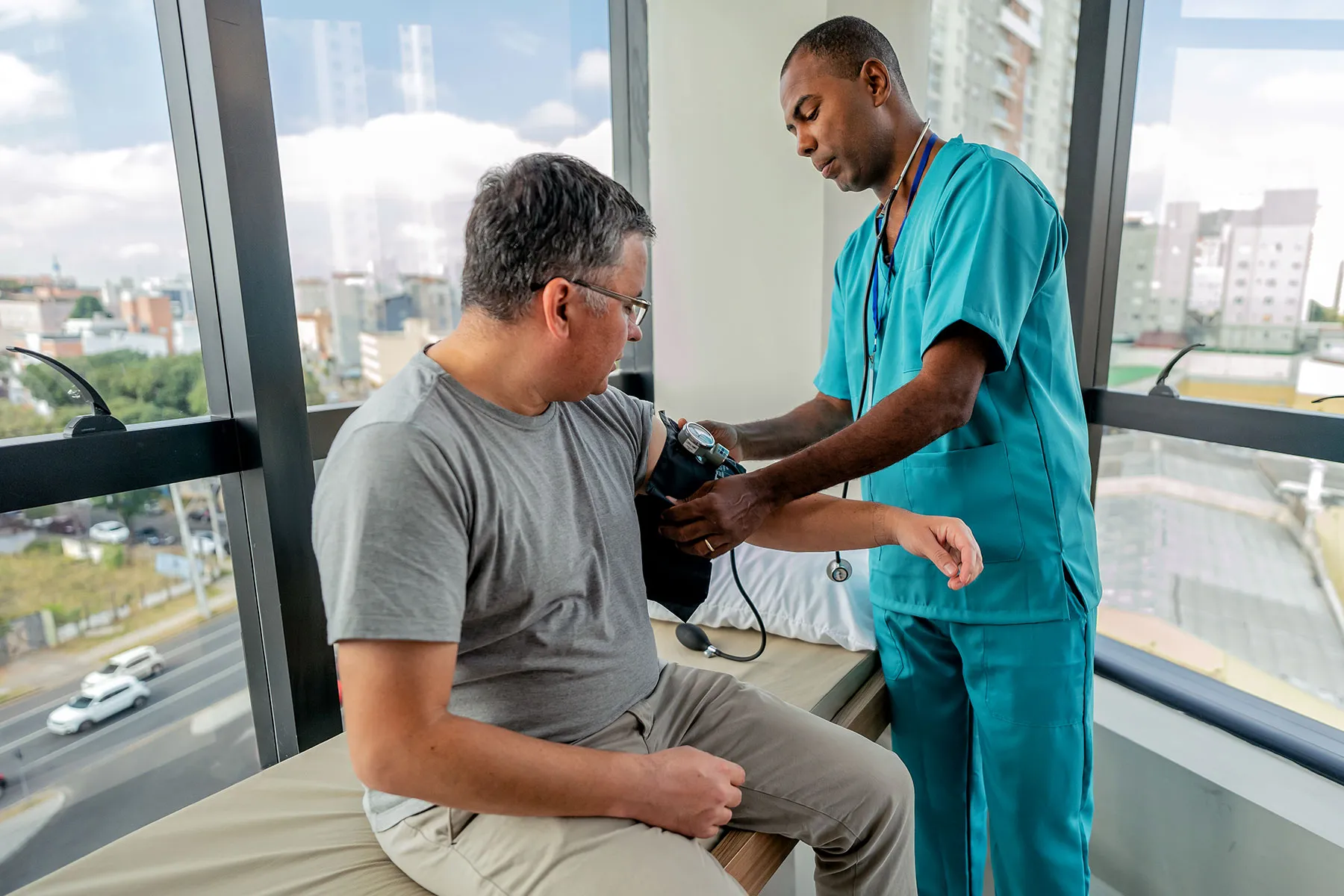
Protocol visits happen on a schedule no payer authorizes, at no cost to the patient.
18% fewer
Physicians serving as principal investigators, 2015 to 2022, while trial volume climbed.
Nearly double
The site count sponsors now routinely plan for to finish enrolling a study.
The industry knows it.
The number of physicians serving as principal investigators fell roughly 18 percent between 2015 and 2022 while trial volume climbed.8 Sponsors now routinely have to nearly double their planned site count to finish enrolling a study. The regulatory floor is lower than most physicians assume. The FDA specifies no minimum qualifications for a principal investigator. You need an active license, a CV, GCP training, financial disclosure, IRB approval, a signed 1572, a delegation log, and controlled storage for investigational product.
The barrier has never been your credentials.
03
Why research operations usually do not grow
Because most physicians who start, stop.
About half of first time investigators never file a second 1572.9 At the site level it is worse.
I pulled 52,835 industry funded trials and examined every United States site listing. Take every site whose first study began in 2012 and ask whether it ever ran another within five years. 83 percent did not. Run the same test on 2014, 2016, 2018 and 2020 and the answer comes back around 80 percent every time, flat for a decade.
I will walk you through that analysis if you want it, including what it cannot tell you.
Figure 3
Flat for a decade
Same test, five groups, ten years, the same answer every time.
My own analysis of ClinicalTrials.gov registry data. Source 14.
The assumption is that those physicians lost interest.
They did not.
Researchers surveyed 201 physicians who ran exactly one trial and stopped.10 44 percent said they wanted to do more trials and had no opportunity. Only 29 percent chose to stop.
Figure 4
Why they stopped
44 percent wanted to do more trials and had no opportunity. Only 29 percent chose to stop.
Source 10.
Then they interviewed 23 investigators who had built research operations that lasted.11 Those physicians reported the same obstacles as the ones who quit. Recruitment difficulty. Reporting burden. Time commitments well past what they had been told to expect. The identical wall, same height, same bricks.
What separated them was unanimous.
All 23 named coordinator support. Not motivation. Not panel size. Not specialty. A person whose entire job was running the operation.
Figure 5
Twenty three of twenty three
Every investigator whose research operation lasted named the same one thing.
Source 11.

The consent conversation is the physician job. Everything that had to happen before it is not.
The reason is not mysterious once you see the work.
Research operations are a fundamentally different business from clinical practice. Here is what actually sits between yes, I am interested, and a running study.
Feasibility questionnaires, run against your patient database, roughly fifteen a year and nearly all unpaid
Regulatory start up, including the 1572, financial disclosures, CVs, licenses, lab certifications, IRB submission and site initiation
Source documentation, purpose built for every visit in the protocol, before visit one happens
Reporting and record keeping, to a standard your clinical charting was never designed to meet
Temperature and drug accountability logs, daily, dated and reconciled
Serious adverse events, reported on a clock measured in hours
Staff training, documented for every delegated task before it is performed
Billing, which is notoriously slow and needs someone to track and pursue it
IRB compliant marketing, where every word a patient could see is approved before use
Patient recruitment and prescreening, chart by chart against inclusion and exclusion criteria
Monitoring visits, and the queries that follow them
Specimen processing and shipping, including spinning, aliquoting and courier deadlines
None of that is difficult. All of it is unfamiliar, and all of it lands on a staff that already worked a full clinic day.
There is one more thing, and it is the part that makes the failure rate look like a character problem when it is not. A survey of 323 sites found that only 41 percent are told upfront when a study is already in enrollment rescue, and about 70 percent of rescue sites receive the same or less support than a normal study.13 The site most likely to be handed a struggling protocol without warning is the brand new one, grateful for the opportunity, with no basis for comparison.
Physicians do not wash out of research because they were not committed. They wash out because they were handed an operations job nobody told them was part of the offer, and because when it ended, nobody was working to get them the next one.
04
Why this works with Tether Research Group
I am not a consultant who writes you a plan and leaves. I am not a CRO, which works for the sponsor and sits on the other side of the table from you. I embed in your practice, build the research operation inside it, and run it.
You are the physician. You sign the 1572, you see the study patients, you make every medical judgment and eligibility determination, you assess every adverse event, and you are who the monitor wants to speak with. Those responsibilities are legally yours and they do not move.
Figure 6
Your side, my side
You
Six things, all clinical
Sign the 1572
See the study patients
Every medical judgment and eligibility call
Assess every adverse event
Speak with the monitor
Investigator training, staff time, and a room
Tether Research Group
Everything else
Business development to land the study at all
Feasibility and database counts
Regulatory and IRB
Contract and budget negotiation
Source documents, binders and logs
Staff training
Recruitment and prescreening
Scheduling and retention
Visit conduct and queries
Specimens and shipping
Monitoring visits
Billing and chasing what is owed
Working the next study while the first one runs
Your column is short and it is clinical. Mine is long and it is operational. That asymmetry is the entire offer.
Starting with getting you a study at all.
A practice with no research history does not get invited to anything, and that is the wall most interested physicians never get over. Landing a first study for a brand new site typically takes six to eight months of business development, and that work is mine. Building the site profile that sponsors and CROs actually evaluate. Completing feasibility questionnaires. Getting your name and your patient population in front of the people who choose sites. You will not be filling out forms hoping somebody calls.
Then the second and the third.
This is the part that separates a research arm from a one time experiment, and it is the specific thing almost nobody does for a first time investigator. While your first study is running, I am already working the next one, positioning your enrollment performance so the people selecting sites for the next protocol already know who you are.
A clean first study is the single best sales asset a site has, and it only works if somebody is out there using it. Half of first time investigators never get a second study. That is not an accident of talent. It is an absence of anyone whose job it was.
And you get one check.
All study billing runs through me. I invoice the sponsors, track what has been earned against completed visits, and pursue what is outstanding, which is slow, persistent work nobody in a clinic has time for. You are not logging into sponsor payment portals, reconciling visit level payments, or calling a CRO about an invoice from four months ago. You receive a single payment from Tether Research Group on a schedule you can plan around.
What you provide is short.
Your time as the investigator. Your training, which I arrange and document. Some staff time when a study visit calls for it. And space in your clinic. The rest is turnkey from me.
You are not adding research to an existing employee job description, which is the most common way this fails. You are not learning fifteen sponsor portals on a Thursday evening. The operational burden that ends four out of five first time sites sits with me.
05
Questions you are entitled to ask
My patients would not be interested.
Roughly 87 percent of patients say they would be willing and 71 percent say they would consider it if their physician encouraged them. They are interested. Nobody has asked them.
My patients would not qualify.
Some will and most will not, and finding the ones who do is my work, not yours. Chart by chart against protocol criteria, plus the community outreach that finds the people who are not in your records yet. Enrollment is the only thing that turns a study award into a functioning research program. A site that wins a study and cannot enroll has taken on an expensive hobby.
You are one person.
Yes, and I am taking one practice. Not a roster, not a portfolio, not a percentage of my attention. One. That is the entire model, because the finding this business is built on is that what separates the investigators who last from the ones who quit is having somebody whose whole job is running the operation. Nobody can do that for six practices at once, and I am not going to pretend otherwise.
Where are you?
Charlotte, Rock Hill and Columbia. One partner practice in that corridor. If you are outside it, tell me and I will say so plainly rather than pretend the model works at a distance.
How long does this take?
Six to eight months of business development to land the first study, with contract negotiation and regulatory start up on top of that. Working backward from a first patient enrolled in summer 2027, the conversation needs to happen this year.
What am I committing to by talking?
Nothing. No fee, no exclusivity, no obligation.
Figure 7
The road to summer 2027
Business development alone runs six to eight months before contracting even opens.
06
Who you would be working with
My name is Ben Epting.
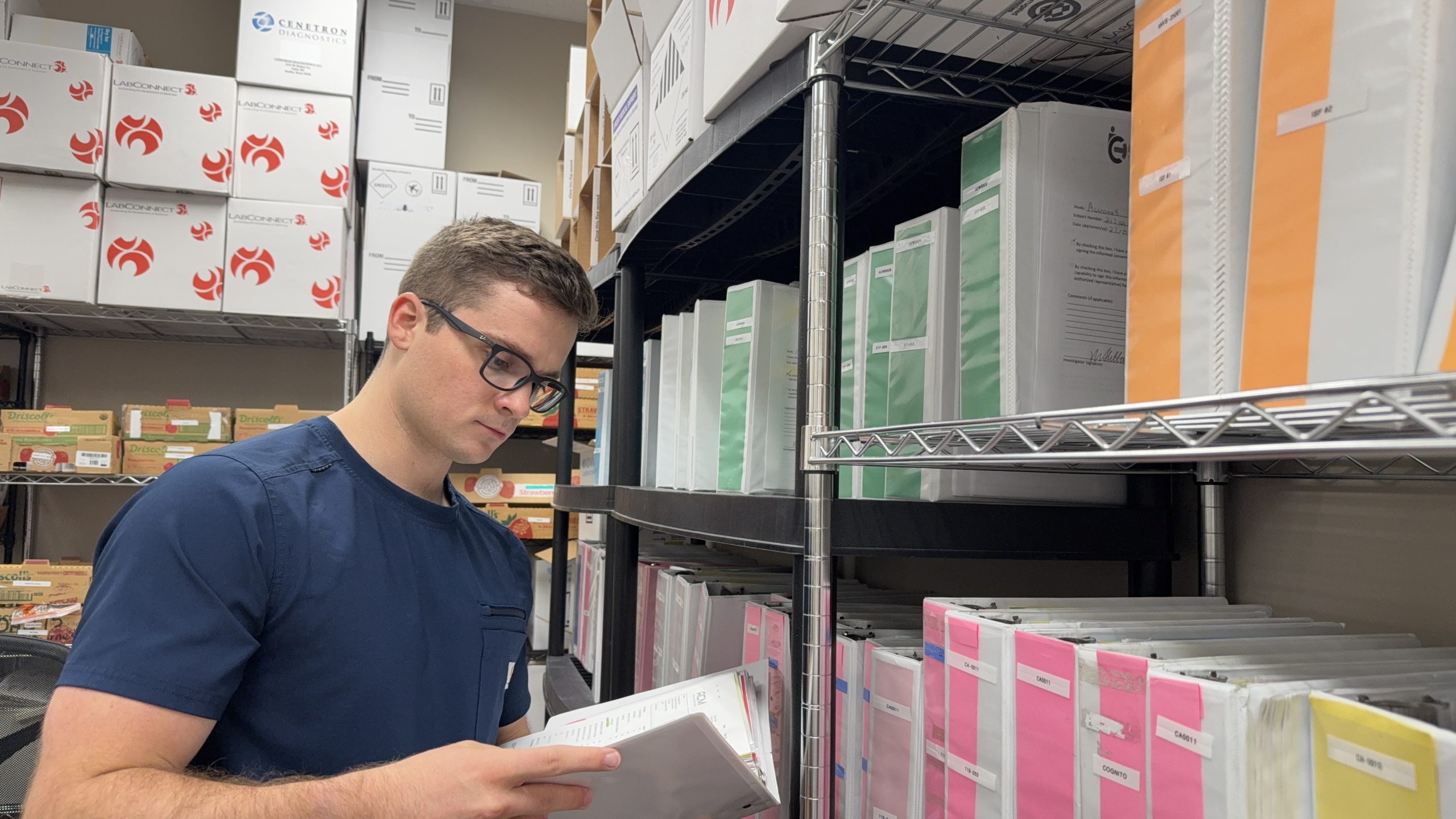
A research site lives or dies on two relationships that pull in opposite directions. One faces the sponsor, getting your site found, evaluated, selected, and then selected again. The other faces the patient, finding the people who might qualify, earning enough trust to get them through a consent conversation, and keeping them on schedule for the length of a protocol.
Most people in this business are competent at one of those. A site with only one of them does not last, and neither is work a physician with a full clinic schedule can do.
My background is on both sides of that.
Sponsor facing, which is what gets a practice with no research history invited to the table at all, and patient facing, which is what turns a study award into an enrolling site. That combination is why I built Tether around business development rather than around coordination alone, because 44 percent of the physicians who ran one study and stopped wanted to keep going and simply had no opportunity. Nobody was working the sponsor side for them.
Underneath both sits the operational foundation, and that part is not theoretical. GCP certified. Twenty plus industry sponsored protocols carried from feasibility through site closeout. I trained under a site owner with thirty years in the business who built to sixteen concurrently running studies in psychiatry, an indication where nothing enrolls on its own and every single patient is identified and recruited by hand.
My specialty inside that operation was site operations and patient recruitment, consistently ahead of enrollment expectations. That matters more than any certificate on the list, because enrollment is what determines whether a research program survives its first year. I know what a monitor is going to look for in your binder because I have been the person who put it there.
It also translates.
If you practice dermatology, endocrinology, family medicine or internal medicine, your patients are easier to identify, easier to qualify and easier to keep on schedule than the population I came up recruiting.
The rest of my background is data.
The registry analysis earlier on this page is my own work, not something I read in a white paper. I pull it, I run it, and I tell you what it says including the parts that cut against my own argument. You will notice I did that twice already.
And the reason any of this exists.
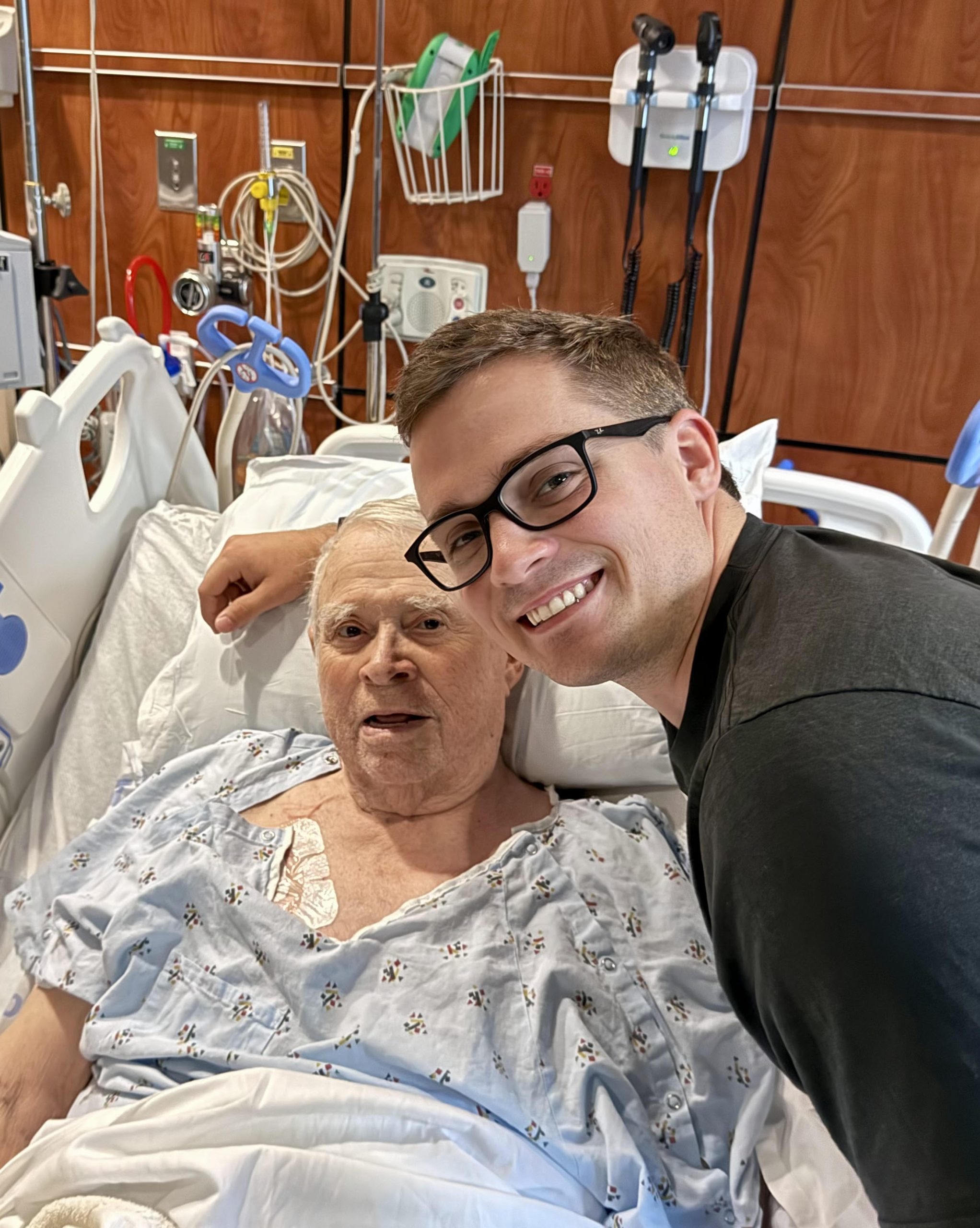
My grandfather had access to research when he needed it, and it changed what his care looked like. Most patients never get that, because most of their physicians were never given a way to offer it. This is not a market I picked off a list.
There is also a part of this job nobody advertises, which is declining studies. The investigators who last turn down protocols with implausible feasibility. The ones who wash out accept whatever they are offered. Part of what you are getting is someone who reads the protocol and the contract before you sign, and who will tell you when a study you have been offered is already in trouble.
07
Who this is not for
I would rather be direct than waste your time.
Not for a practice at capacity.
If your rooms and your schedule are full, the answer is no, and I will say so.
Not for anyone expecting something passive.
Your involvement is bounded and it is clinical rather than administrative, but it is real.
Not for a practice that wants to hand research to an existing medical assistant.
That is the failure mode this is designed to prevent.
Probably not if you are within a couple of years of retiring.
One study run cleanly brings the next one, and that takes twelve to eighteen months to begin compounding.
Not a remedy for a struggling practice.
This is a decision made from stability.
If none of that rules you out, there are two ways to start.
08
Two ways to start
Get the blueprint
Everything this page deliberately left out. The economics, the timeline, and what the first year actually asks of you.
The phase by phase timeline from feasibility to first enrolled patient, including the contract cycle nobody warns you about
How to plan for a start up period, and what happens before anything comes back
How per patient study budgets are constructed, and what to examine before you agree to one
What to ask a sponsor or CRO before you sign, including the question that tells you whether a study is already in trouble
The specific failure points that end most first studies, in the order they occur
One email with the blueprint attached. No newsletter, no list rental, no follow up sequence unless you ask for one.
Or start a conversation
Twenty minutes, no charge, no presentation, no obligation. I will ask about your specialty, your panel, your space and your staffing, and I will tell you plainly whether I think a sponsor would select your site. If the answer is no, you will hear that from me instead of a pitch.
Ben Epting, Tether Research Group.
The strongest finding in the investigator literature is also the simplest. The physicians who succeeded at research and the physicians who quit ran into exactly the same obstacles. All 23 of the ones who lasted said the thing that carried them through was having a coordinator. That is not a marketing claim, it is the finding, and it is the reason this practice exists.
44 percent of the physicians who ran one study and stopped wanted to keep going and had no opportunity. Nobody has the job of making a first time investigator second study happen. That is the job I want, and I am only going to be doing it for one practice.
Sources
- Harris Poll survey of US adults, 4,492 respondents, on willingness to take part in clinical research.
- Primary care physician survey, 2025, on perceived patient interest and eligibility.
- Ozdemir and colleagues, PLoS ONE, 2015. 140 English NHS trusts, 2.35 million admissions.
- Boaz and colleagues, BMJ Open, 2015. Systematic review, 33 studies, nine countries.
- Survey of general practitioners on research participation, 3,556 respondents, Archives of Public Health, 2024. German sample.
- Glass and Guy, ACRP, 2022. Open Payments analysis, 58,335 investigators.
- Industry site activation benchmarking, independent versus academic medical center medians.
- JAMA Network Open, 2024. US principal investigator headcount, 2015 to 2022.
- Fordyce and colleagues, Contemporary Clinical Trials Communications, 2019. Form FDA 1572 filings, BMIS database, 172,453 investigators.
- Corneli and colleagues, 2017. Survey of one and done investigators, 201 respondents.
- Corneli and colleagues, 2020. Interviews with 23 sustained investigators.
- Tufts CSDD site qualification benchmarks, 290 sites, 2024.
- Enrollment rescue survey, 323 sites.
- My own analysis of ClinicalTrials.gov registry data, 52,835 industry funded interventional studies, all US site listings.